
Non-Destructive Testing
Non-Destructive Testing
Our Core Non-Destructive Testing (NDT) Methods
Expert Non-Destructive Testing in Consett, North East: Magnetic Particle Inspection, Dye Penetrant Inspection, Ultrasonic Testing & Eddy Current Inspection.
At Pentagon Inspection, we offer a full range of advanced Non-Destructive Testing (NDT) techniques throughout Consett. We do this to assess the integrity of materials, components, and structures, without causing damage.
Our certified technicians use proven inspection methods such as ultrasonic testing (UT), magnetic particle inspection (MPI), dye penetrant inspection (DPI), and eddy current inspection (ECI) to detect surface and subsurface defects. This ensures your assets remain safe, compliant, and operational.
Visual Testing (VT)
The first line of defence – used to identify visible defects during inspection.
How It Works: Performed with the naked eye or tools like borescopes, mirrors, or cameras. Inspectors assess the condition, cleanliness, and workmanship of components.
Common Uses
- Weld profile and finish checks
- Corrosion or deformation assessment
- Pre/post-maintenance evaluations
Advantages
- Quick, accessible, and cost-effective
- Can be performed with minimal equipment
- Supports other NDT methods

Magnetic Particle Inspection (MPI)
Purpose: Detects surface and near-surface defects in ferromagnetic materials through magnetic particle inspection techniques.
How It Works: A magnetic field is applied to the component, and iron particles (dry or suspended in a liquid) are introduced. If a flaw is present, it disrupts the magnetic field, causing particles to gather at the defect location, making it visible under correct lighting.
Common Uses
- Structural steel
- Weld joints
- Castings and forgings
Advantages
- Quick, portable, and cost-effective
- Ideal for detecting surface-breaking cracks and inclusions
- Widely used in non-destructive testing programmes
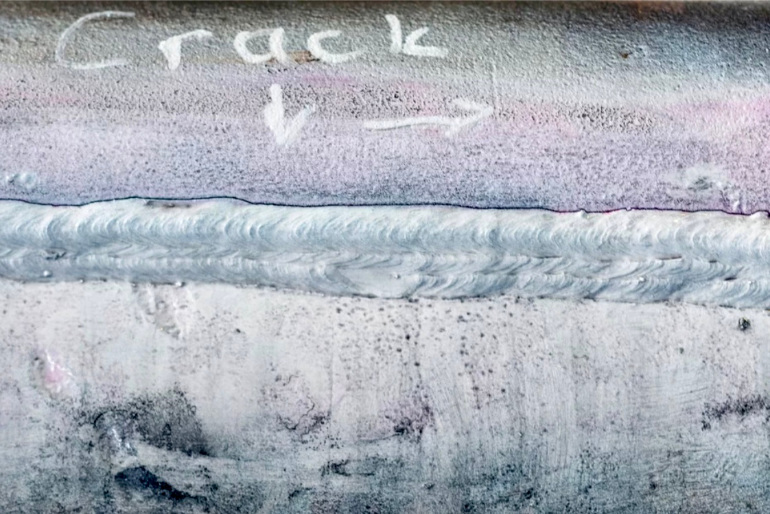
Dye Penetrant Inspection (DPI)
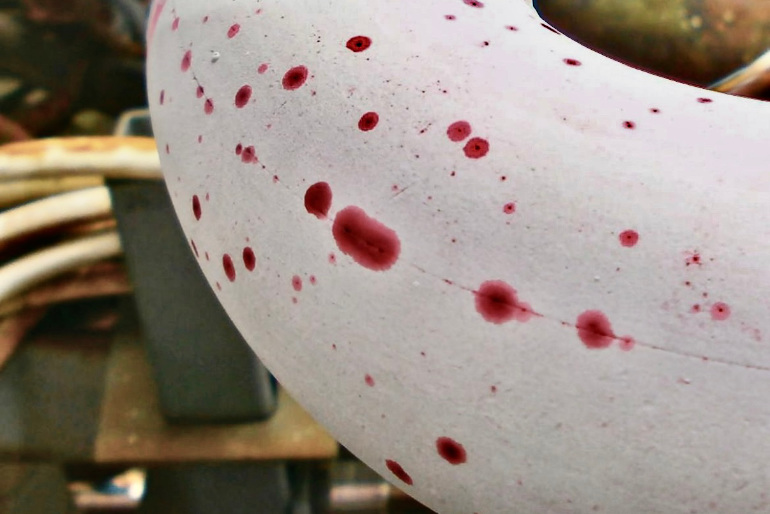
Purpose: Identifies surface-breaking defects in non-porous materials using dye penetrant inspection.
How It Works:A visible or fluorescent dye is applied to the clean surface. After a dwell period, excess dye is removed, and a developer is applied, drawing the dye from defects and highlighting them for inspection.
Common Uses
- Welds on stainless steel and aluminium
- Non-ferrous components
- Through-wall leak/crack detection
Advantages
- Inexpensive and simple
- Effective on a wide range of materials
- Excellent for fine surface crack detection
Ultrasonic Testing (UT)
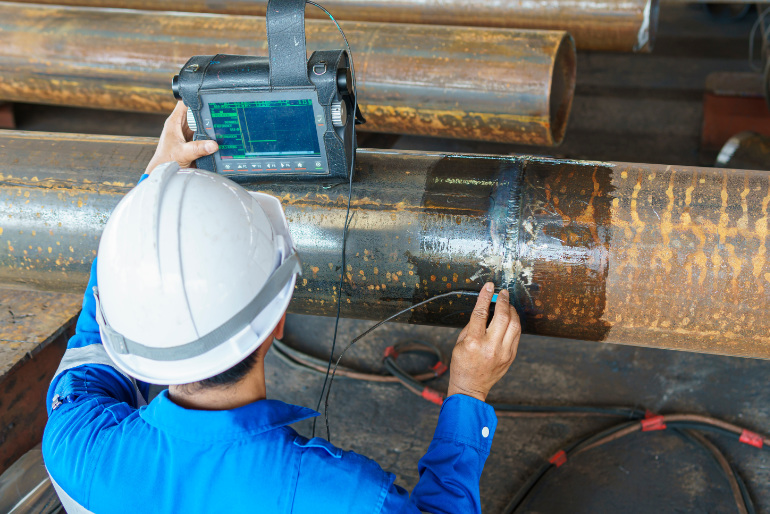
Purpose: Locates internal and surface-connected flaws using high-frequency sound waves, commonly known as ultrasonic testing (UT).
How It Works: A transducer emits ultrasonic waves into the material. Reflected waves from flaws or boundaries are detected and displayed, allowing accurate assessment of defect depth and size.
Common Uses
- Weld inspection
- Wall thickness measurement
- Flaw detection in pressure vessels and pipelines
Advantages
- Highly accurate and reliable
- Non-invasive with real-time results
- Suitable for thick or complex materials
- A leading method in advanced NDT inspection
Eddy Current Inspection (ECI)
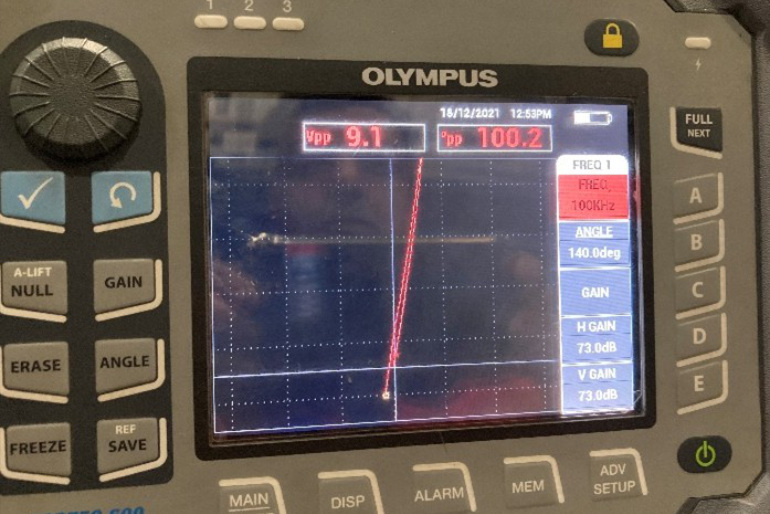
Purpose: Detects surface and near-surface defects in conductive materials using eddy current testing (ECI).
How It Works: A probe induces an electromagnetic field in the test material. When there’s a flaw, the flow of eddy currents is disrupted, which alters the probe signal, allowing inspectors to identify and characterise the defect.
Common Uses
- Heat exchanger tubing
- Aircraft components
- Surface crack detection through coatings
Advantages
- Sensitive to small surface defects
- No couplants or aersol consumables required
- Fast, repeatable, and ideal for automation in non-destructive testing
Enquire Today to book in for your testing
At Pentagon Inspection, we don’t just inspect—we protect your assets, operations, and people.